
The Global Wetland Watch (GWW) has partnered with selected pilot countries to ensure GWW outcomes are designed to serve national needs. South Africa is one of these pilot countries that has joined the discussion and co-development with the GWW team. As part of this in-country engagement, the GWW team has just returned from a 10-day mission to South Africa to conduct workshops and field trips to understand national wetland challenges and come up with new solutions to manage and restore wetlands globally.
Author Archives: isno
SDG 6.5.1 IWRM Action Planning Course – 2025 edition
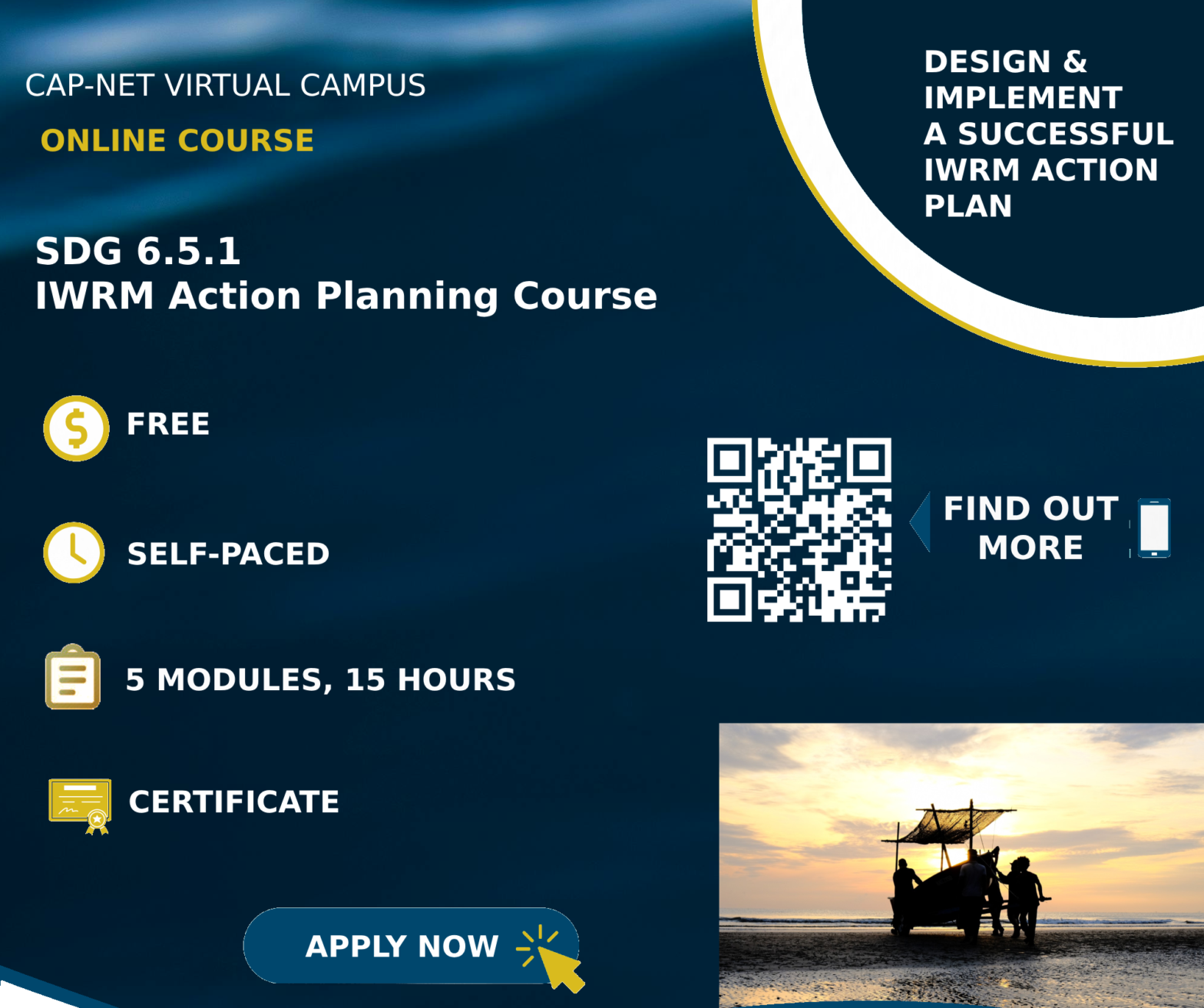
Do you want to learn how to design and implement a successful government endorsed IWRM action plan? Sign up to this free online course for a clear, step-by-step guide.
New vacancy: Student assistant to work on DHI’s Global Hydrological Model

DHI is looking for a part time Student Assistant to support operation and maintenance for their large-scale hydrological model, DHI-GHM. The application deadline is 17 January 2025.
Global Partnership on Plastic Pollution and Marine Litter (GPML)- digital tools to move towards a future without plastic pollution

The UNEP-DHI Centre is supporting the United Nations Environment Programme (UNEP) in its efforts to curb plastic pollution by developing digital solutions to estimate plastic pollution in rivers and freshwater ecosystems, as well as in facilitating data sharing on plastics across organisations and nations.
Why coordinating climate and water management action matters – Findings from the latest SDG 6.5.1 report to read for COP 29

Integrated Water Resources Management (IWRM) needs to be part of the discussion for the climate change adaptation agenda at UNFCCC COP 29. With the conference running in Baku, Azerbaijan from November 11th to 22nd, it’s an opportune moment to assess the coordination between water resources management and climate actions.
UN Women launches 2024 gender snapshot report, featuring inputs from UNEP-DHI

The UNEP-DHI Centre contributed to the 2024 gender snapshot conclusions on SDG 6, to ensure availability and sustainable management of water and sanitation for all. The report highlights how women are central to water collection and use, but marginalized in water management, plans and decisions.
Valuing Water in Tanzania:(Re)assessing the Contribution of Water to the National Economy

A series of publications was developed through the IWRM SDG6 Support Programme on valuing water in Tanzania with the objective of assessing the contribution of water to the national economy.
Generation Restoration: Urban Nature-based Solutions Tool

The UNEP-DHI Centre is developing an online tool to support upscaling of urban Nature based Solutions (NBS) climate solutions, under UNEP’s Generation Restoration initiative (2023-2025). The Urban NBS Tool will support the identification and assessment of key environmental data in the project cities, with the goal to better understand climate risks and NBS potential to address these risks within the pilot cities.
Valuing Water in Tanzania product launch

The Ministry of Water of Tanzania, the Wami Ruvu Basin Water Board and GWP, on behalf of the SDG 6 IWRM Support Programme, have been collaborating to understand the economic value of water for Tanzania, and will be presenting the results in a public hybrid format, online and in-person at select sites.
Tenth session of the Meeting of the Parties to the Water Convention, side-event: From data to action: Using SDG 6.5 reporting to enhance transboundary cooperation

UNEP-DHI is co-hosting a side event during the Tenth session of the Meeting of the Parties to the Water Convention (MOP 10) in, Slovenia on SDG 6.5 reporting.
Progress on Ambient Water Quality – Mid-term status of SDG Indicator 6.3.2 and acceleration needs, with a special focus on Health

This report contains the findings of the 2023 global reporting and monitoring exercise on SDG indicator 6.3.2 – Proportion of bodies of water with good ambient water quality.
Progress on Water-related ecosystems – Mid-term status of SDG Indicator 6.6.1 and acceleration needs with a special focus on Biodiversity

This report contains the findings of the 2023 global reporting and monitoring exercise on SDG indicator 6.6.1 – Change in the extent of water-related ecosystems over time.