News
Join us for the launch of the Global Wetland Watch
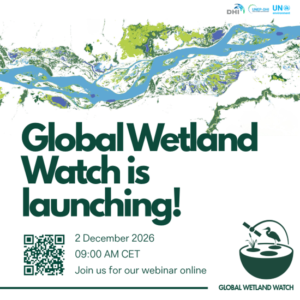
Join us online on 2 December at 09:00 CET for the launch of Global Wetland Watch, a new open platform to map, monitor and understand how wetlands are changing worldwide.

Join us online on 2 December at 09:00 CET for the launch of Global Wetland Watch, a new open platform to map, monitor and understand how wetlands are changing worldwide.
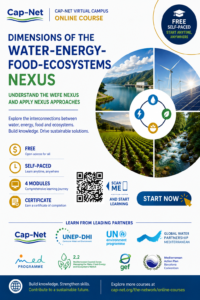
In collaboration with Cap-Net, and Global Water Partnership–Mediterranean (GWP-Med), the UNEP-DHI Centre is launching the course Dimensions of the Water-Energy-Food-Ecosystems (WEFE) Nexus Management. This online, free and self-paced course offers four modules to deepen the understanding of specific Water-Energy-Food-Ecosystems (WEFE) Nexus interlinkages and actively promote joint solutions that deliver cross-sectoral benefits across diverse geographical, environmental, and socio-economic contexts.
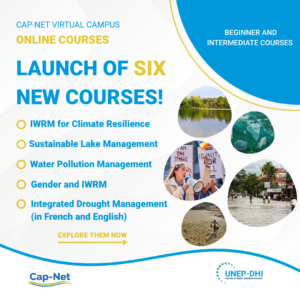
The 2026 editions of UNEP-DHI’s online training courses are now open, offering practitioners, policymakers, and water professionals worldwide the opportunity to strengthen their skills in addressing today’s most pressing water challenges.

This joint initiative of the United Nations Environment Programme (UNEP) and Rotary International, delivered through an online platform, aims to enable community led action to protect, restore, and sustainably manage freshwater ecosystems.

On World Wetlands Day 2026, Global Wetland Watch is sharing a preview of its data, designed to make wetlands more visible, better understood, and easier to track over time, from local to global scales.

As part of the ongoing efforts under the Global Wetland Watch (GWW) initiative, a national consultation and coordination visit across Australia was conducted. The purpose of this trip was to engage directly with key stakeholders involved in wetland monitoring, policy, and conservation.

The Global Wetland Watch (GWW) has partnered with selected pilot countries to ensure GWW outcomes are designed to serve national needs. South Africa is one of these pilot countries that has joined the discussion and co-development with the GWW team. As part of this in-country engagement, the GWW team has just returned from a 10-day mission to South Africa to conduct workshops and field trips to understand national wetland challenges and come up with new solutions to manage and restore wetlands globally.
The world has mismanaged its freshwater reserves for decades, hampering progress towards the SDGs. Some 50 per cent of countries globally have one or more types of freshwater-related ecosystems – rivers, lakes, wetlands or aquifers – in a state of degradation, finds a recent report from UNEP.

This report contains the findings of the 2023 global reporting and monitoring exercise on SDG indicator 6.6.1 – Change in the extent of water-related ecosystems over time.

The Global Wetland Watch supports countries to protect and restore the world’s wetland ecosystems by utilizing both satellite and in-situ data, and provide high resolution global map layers on wetlands. Facilitated by the UNEP-DHI Centre on Water and Environment, DHI will take the lead in the machine learning and system development, while UNEP will provide strategic leadership and secure political and institutional engagement from governments.

This guide outlines the many ways we can all join forces to give nature a helping hand by acting today, making smart choices and raising our voice for restoration.
We cannot turn back time, but we can grow forests, green our cities, harvest rainwater and eat soil-friendly foods. We are the generation that can make peace with land.

World Wetlands Day is a global awareness campaign celebrated every year on 2 February to highlight the value of wetlands. And, not coincidentally, today is also the official opening day of the Global Wetland Center that DHI has established together with the University of Copenhagen and GEUS!
