Note on Managing Invasive Aquatic Plants in the Yamoussoukro Lakes, Côte d’Ivoire (2023)
This note describes key challenges and solutions to managing invasive aquatic plants, focusing on the Yamoussoukro lakes in Côte d’Ivoire.

This note describes key challenges and solutions to managing invasive aquatic plants, focusing on the Yamoussoukro lakes in Côte d’Ivoire.

Over the next six years, the Global Wetland Center will acquire more knowledge on how wetlands can reduce the emission and increase the absorption of greenhouse gases. The new research centre is established by DHI A/S, University of Copenhagen and GEUS and is supported by the Novo Nordisk Foundation with DKK 60 million.

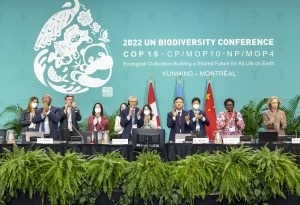
During COP15, UNEP urged Parties to the Convention on Biological Diversity to work with nature to protect biodiversity. A UNEP-DHI publication, How Nature Can Help Address Water-related Challenges – Freshwater Ecosystems Technical Brief, highlights the role that freshwater ecosystems can play in tackling the triple planetary crisis – climate change, nature and biodiversity loss, and pollution.

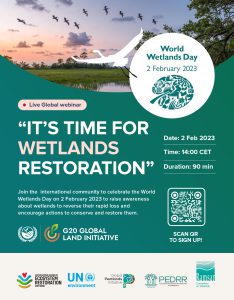
The world commemorates World Wetlands Day on February 2, 2023, to raise global awareness about the vital role of wetlands for people and our planet. The day highlights the urgent need to restore and protect wetlands.

Join the international community to celebrate World Wetlands Day on 2 February 2023. Meet experts as they discuss the importance of restoring wetlands ecosystems and share success stories during the webinar.

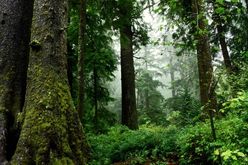
UNEP is co-organizing a session at the World Forestry Congress in Korea (2-6 May) entitled “Forest-Water Connections to achieve the SDGs”. The session will explore how managing forests for water-related services can contribute to achieving the SDGs.

Wetlands are some of the planet’s most important ecosystems. They’re a haven for wildlife, they filter pollution and they’re important stores of carbon. But they’re also one of the Earth’s most threatened habitats.

A call to take action for wetlands is the focus of this years’ campaign.

We asked Stuart Crane, a freshwater expert with the United Nations Environment Programme (UNEP), to explain UNEP’s work on the three SDG indicators under UNEP’s custodianship.

Historically, there has been little data on the global state of freshwater ecosystems. To fill the gap, UNEP used Earth Observation technologies to track, over long time periods, the extent to which freshwater ecosystems are changing. Researchers surveyed more than 75,000 bodies of water in 89 countries.

The Framework for Freshwater Ecosystem Management identifies the key activities countries can undertake to sustainably manage freshwater ecosystems. Volume 1 provides an overview of the framework, while Volume 2 focuses on technical guidelines for classification and target‑setting. Volume 3 presents case studies, and Volume 4 provides the scientific background for regional consultations on developing water quality guidelines for ecosystems.

This document describes the UN Environment Programme’s five-year Freshwater Strategy from 2017 to 2021.
UNEP DHI Partnership – Centre on Water and Environment
Agern Allé 5, 2970 Denmark
Tel: +45 45169200