The State of Global Water Resources 2022 – WMO Report
The second edition of WMO’s flagship report offers a comprehensive and consistent assessment of the state of water resources worldwide.

The second edition of WMO’s flagship report offers a comprehensive and consistent assessment of the state of water resources worldwide.

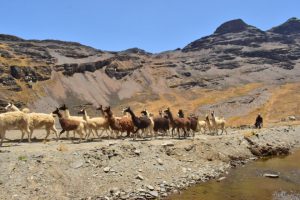
The tropical glaciers of the Andes, which feed many of the rivers in the Amazon basin, are some of the fastest retreating ice packs in the world. Their disappearance is not only upending lives in mountain communities, it is also sparking water shortages and hampering hydro-electric power generation across lowland communities home to hundreds of millions of people.

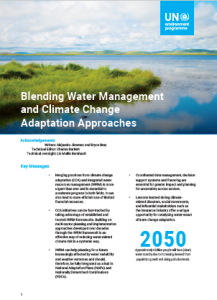
A new report from UNEP with contributions from UNEP-DHI Centre offers recommendations on how to combine water management and climate change adaptation approaches to mitigate the global water and climate change crises.

Lake Turkana and its river basins are vital for the people, economies and wildlife of both Kenya and Ethiopia. Given the region’s historic vulnerability to drought, it was a surprise to many when devastating floods hit lakeside settlements in 2020. However, a recent study by the UNEP-DHI indicates that such floods may become a more regular occurrence in years to come…

A cascade of challenges- from climate change and COVID 19 to rising conflict- is widening the inequalities in living conditions across the world. Rapid urbanization is exacerbating many of the challenges. If the pledge of the 2030 Agenda to leave no one behind is to be met, urgent action is needed in extending basic infrastructure, including water and sanitation, to all.

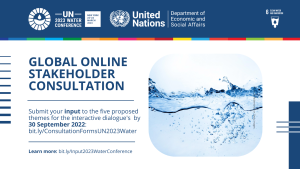
Until the 30th of September 2022, all stakeholders, including non-governmental organizations, civil society, academic institutions, the scientific community, the private sector, and others, have a chance to contribute their inputs on the themes proposed for the UN 2023 Water Conference.

The seventh iteration of the world’s largest and longest running conference series on marine plastic pollution is upon us. Taking place between the 18th to the 23rd of September 2022 in Busan, UNEP-DHI will feature in a number of technical sessions.

This webinar informs on the main findings of the Status Report on the Implementation of Integrated Water Resources Management (IWRM) in the Arab Region. Speakers discuss key enablers for IWRM implementation and lay out the support available to countries in reporting, planning, and implementing IWRM.

A multitude of natural and socioeconomic conditions impact the sustainable management of water resources. UNEP-DHI conducted a rapid assessment to identify challenges and opportunities to enhance water security in the ASAL regions of Kenya.

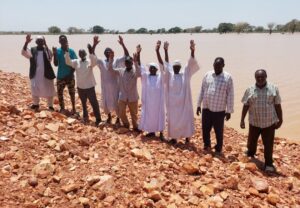
Interlocking problems of illegal logging, deforestation, land degradation, and climate change exacerbate the risk of devastating flooding in Somalia. Ahead of flash flood season, UNEP-DHI has released a study to aid flood management using nature-based solutions.

This report assesses progress made on IWRM implementation in the Arab region based on country surveys submitted in 2017 and 2020. Through analyzing four fundamental dimensions of IWRM, the report identifies areas of progress and priority areas for accelerating full implementation.

Groundwater is a vital resource supporting sustainable development, but experts say it needs to be properly managed.
UNEP DHI Partnership – Centre on Water and Environment
Agern Allé 5, 2970 Denmark
Tel: +45 45169200